
Breathing New Life into Legacy Parts: The Power of Reverse Engineering Services
12-2-2026
Introduction: When the Drawings Are Gone
It’s a nightmare scenario for any plant manager: a critical machine breaks down, the OEM is out of business, and the original blueprints are nowhere to be found. Production halts, and costs skyrocket.
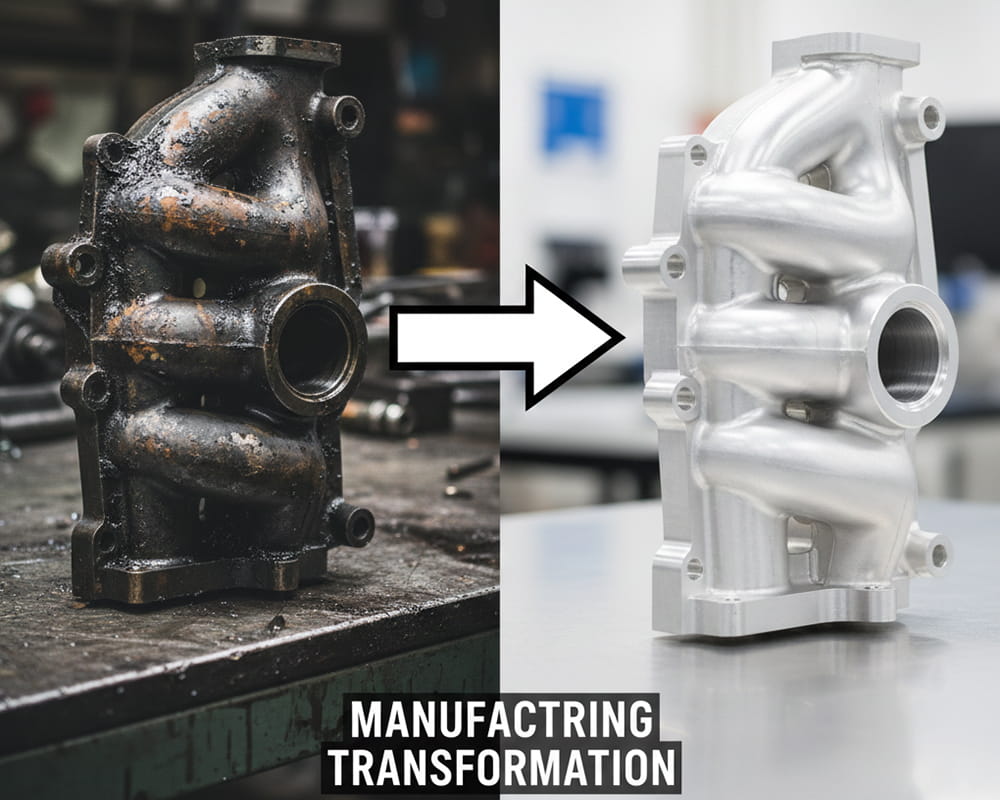
This is where mechanical reverse engineering services save the day. At JSE Precision, we don't just copy parts; we analyze, digitize, and improve them. By combining 3D scanning with expert CAD design, we can recreate obsolete components with modern materials and tighter tolerances than the originals.
The Reverse Engineering Workflow
Converting a physical object into a manufacturable digital asset requires more than just a pair of calipers.
Step 1: 3D Scanning & Metrology
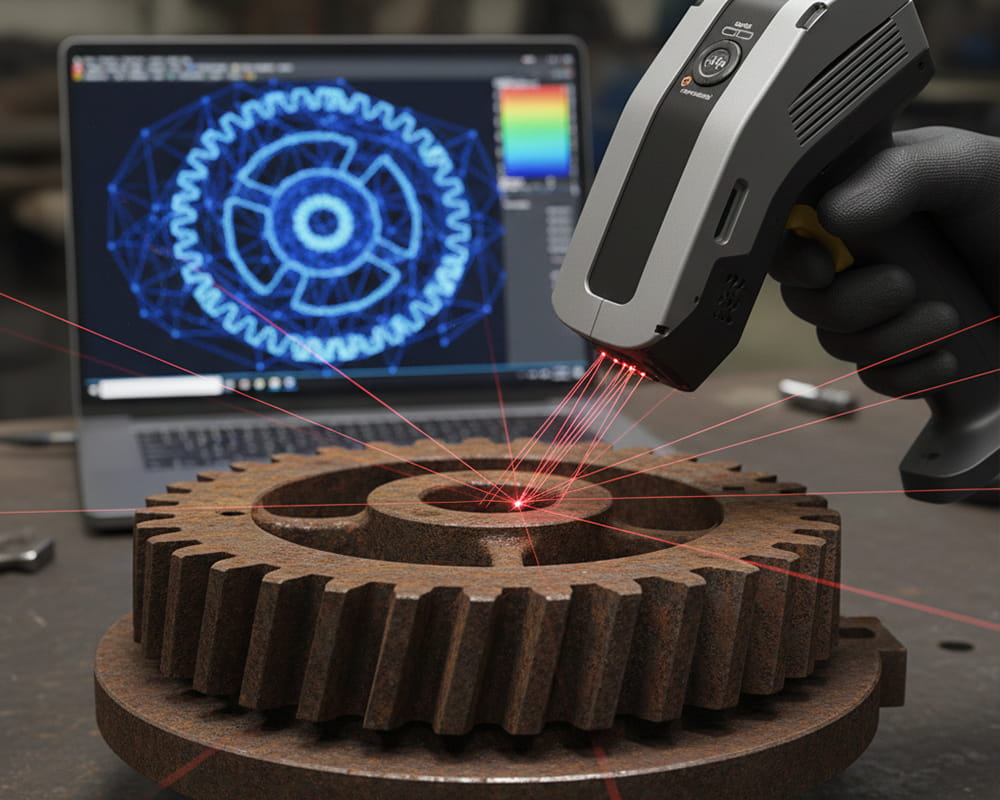
We use high-resolution laser scanners to capture the exact geometry of the worn part, creating a point cloud with millions of data points.
Step 2: CAD Reconstruction & Design Intent
A scan is not a CAD file. Our engineers interpret the scan data, distinguishing between the original "design intent" and wear-and-tear. We reconstruct the part in SolidWorks, correcting warped surfaces and damaged threads.
Step 3: Optimization
Since we are rebuilding the file, we can improve it.
- Material Upgrades: Replacing weak plastic with machined aluminum.
- Design Tweaks: Adding fillets to reduce stress concentrations.
Applications in Industry
- Automotive Restoration: Recreating engine blocks or trim for vintage vehicles.
- Industrial Maintenance: Replacing gears, shafts, and impellers for legacy pumps and conveyors.
- Competitor Analysis: Understanding the assembly and manufacturability of market products.
From Cloud to Component
Once the CAD file is verified, we seamlessly transition to production.
- Validation: Virtual stress testing (FEA) to ensure the new design holds up.
- Fabrication: Utilizing our internal CNC machining or 3D printing capabilities to manufacture the replacement.
- QC Check: Scanning the new part to verify it matches the digital model.
Frequently Asked Questions
Can you reverse engineer a broken part? Yes. If we have all the pieces, we can digitally reassemble them to determine the original dimensions.
Is this legal? Reverse engineering for repair and interoperability is generally legal, but we adhere to strict IP laws and will not reproduce patented items for commercial resale without authorization.
How accurate is the 3D scanning? Our metrology-grade scanners are accurate to within $\pm 0.001"$, ensuring the replacement part fits perfectly.
Restore Your Equipment's Functionality
Don't let obsolete parts render your machinery useless. Contact us for professional mechanical reverse engineering services and turn physical challenges into digital solutions.
[Contact Us for a Reverse Engineering Assessment]
Internal Link Suggestions
- CAD Design Services Overview (Link to Service Page)
- 3D Scanning Capabilities (Link to Tech Specs)
- Case Study: Restoring a Vintage Production Line (Link to Portfolio)